When does morning sickness end? For many pregnant women, nausea and vomiting begin to improve between weeks 12 and 16 of pregnancy. Most experience significant relief by weeks 16 to 20, although some continue having symptoms for longer. Every pregnancy is different, so the exact timeline can vary.
Morning sickness is one of the most common symptoms of early pregnancy. Despite its name, nausea can occur at any time of the day or night. Some women experience mild discomfort, while others struggle with frequent vomiting that affects their daily routines.
Pregnancy hormones play an important role in these symptoms. However, individual sensitivity, previous pregnancy experiences, and other factors may also influence how someone feels.
Understanding the typical timeline can help expectant mothers prepare for changes during pregnancy. In addition, knowing when to seek medical care is essential because persistent vomiting can sometimes cause dehydration and other complications.
When Does Morning Sickness Start and End?
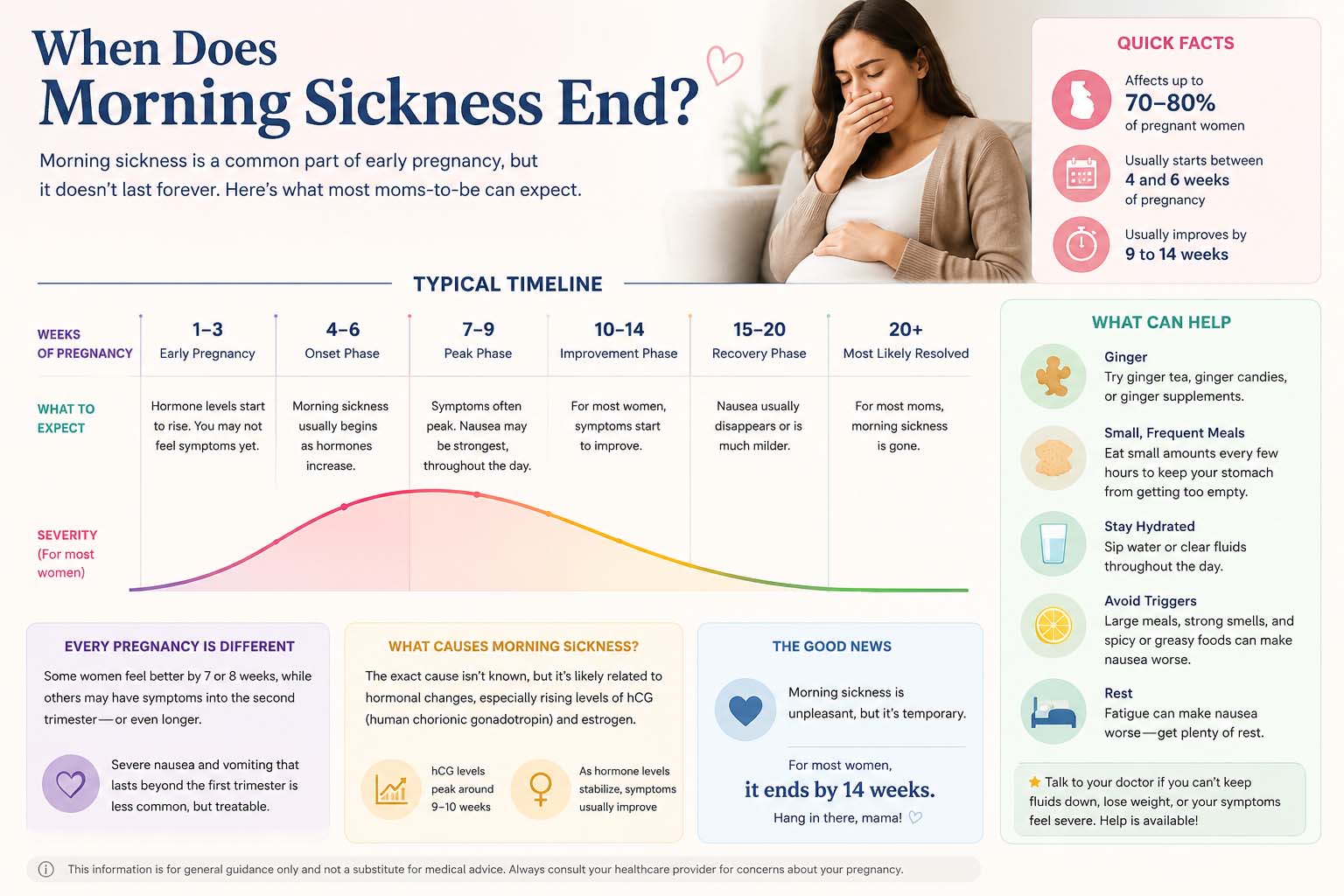
When does morning sickness end? commonly begins between weeks 4 and 7 of pregnancy. Symptoms often become more noticeable as the first trimester progresses.
For many women, nausea reaches its strongest point around week 9. However, the timing and severity vary considerably between pregnancies.
Most women notice gradual improvement during the second trimester. Although some feel better by week 12, others continue experiencing symptoms until weeks 16 to 20.
When Morning Sickness Usually Starts
Early pregnancy involves rapid hormonal changes. In particular, human chorionic gonadotropin (hCG) and a hormone called GDF15 are associated with pregnancy-related nausea and vomiting.
During this period, certain smells, foods, and activities may trigger discomfort. For example, cooking odors or an empty stomach can make nausea worse for some women.
Symptoms may include:
- Nausea after waking up.
- Vomiting during the day or night.
- Increased sensitivity to food smells.
- Reduced appetite.
- Difficulty eating regular meals.
However, not every pregnant woman experiences morning sickness. Its absence does not automatically indicate a pregnancy problem.
Women confirming a possible pregnancy may also want to know when is the best time to take a pregnancy test morning or night to understand how testing time can affect results.
When Pregnancy Nausea Begins to Improve
Many women notice that nausea gradually becomes less frequent after the first trimester.
For example, foods that previously triggered discomfort may become easier to tolerate. Appetite and energy may also improve.
Nevertheless, symptoms do not always disappear suddenly. Some women experience good days followed by periods of nausea before the condition resolves.
Therefore, a gradual reduction in symptoms is common.
When Does Morning Sickness End in Pregnancy?
For most women, morning sickness improves substantially by the middle of pregnancy. Many experience relief during weeks 12 to 16, while symptoms resolve by week 20 in approximately nine out of ten affected pregnancies.
However, some women continue experiencing nausea beyond this period.
The second trimester often brings greater comfort because early pregnancy symptoms begin to settle. As a result, eating regular meals and completing everyday activities may become easier.
Why Symptoms Often Improve During the Second Trimester
Pregnancy-related nausea involves several biological factors, including hormonal signaling and individual sensitivity.
As pregnancy progresses, the body’s response to these changes may shift. Consequently, nausea often becomes less severe.
However, researchers have not identified one simple explanation that applies to every pregnancy.
Better tolerance of food, improved hydration, and more consistent eating patterns may also make daily symptoms easier to manage.
Can Morning Sickness Last Until Delivery?
Yes. Although most women improve earlier, some continue experiencing nausea or vomiting throughout pregnancy.
Persistent symptoms do not always indicate a serious condition. Nevertheless, ongoing vomiting deserves medical attention, particularly when it affects hydration, nutrition, or weight.
In addition, nausea that begins for the first time later in pregnancy may have causes other than typical morning sickness.
Therefore, pregnant women should discuss new, worsening, or persistent symptoms with their healthcare professional.
Typical Morning Sickness Timeline by Week
A pregnancy timeline can help explain when symptoms commonly begin, peak, and improve.
However, these ranges describe general patterns rather than a fixed schedule.
| Pregnancy stage | Typical morning sickness pattern |
|---|---|
| Weeks 4–6 | Nausea may begin |
| Weeks 7–10 | Symptoms often become more noticeable and may peak |
| Weeks 11–13 | Some women begin experiencing relief |
| Weeks 14–16 | Many women notice substantial improvement |
| Weeks 17–20 | Symptoms resolve for most affected women |
| After week 20 | A smaller number continue experiencing nausea |
Early Pregnancy: Weeks 4–10
During early pregnancy, nausea may develop gradually.
Some women notice mild queasiness before experiencing stronger symptoms. Others may have vomiting without a predictable daily pattern.
For example, strong smells, certain foods, or long periods without eating may trigger nausea.
Although symptoms can be uncomfortable, mild morning sickness is common during this stage.
End of the First Trimester: Weeks 11–13
By the end of the first trimester, some women begin feeling better.
Nausea may occur less frequently, while appetite gradually returns. However, others continue experiencing significant symptoms.
Therefore, reaching week 12 does not guarantee that morning sickness will stop immediately.
Second Trimester: Weeks 14–20
The second trimester brings noticeable relief for many pregnant women.
As nausea improves, regular meals may become easier to manage. In addition, women may feel more comfortable returning to activities that early symptoms disrupted.
Nevertheless, some continue experiencing occasional nausea during this period.
Later Pregnancy: After Week 20
A smaller proportion of women experience ongoing nausea after week 20.
However, new nausea in later pregnancy may also relate to acid reflux, digestive changes, infections, or other medical conditions.
If symptoms appear suddenly or become severe, medical assessment is important.
Why Morning Sickness Lasts Longer for Some Women
Morning sickness varies because pregnancy affects each person differently.
Several factors may influence symptom severity and duration.
Hormonal and Biological Differences
Research links pregnancy-related nausea to hormonal signaling, particularly GDF15.
Individual sensitivity to these biological changes may help explain why some women experience stronger symptoms than others.
However, hormone levels alone cannot predict exactly how long nausea will last.
Multiple Pregnancies
Women carrying twins or other multiples may experience more severe nausea and vomiting.
This can happen because multiple pregnancies involve different hormonal conditions.
Nevertheless, not everyone expecting twins experiences prolonged morning sickness.
Previous Pregnancy Experiences
Women who experienced significant nausea during a previous pregnancy may have an increased likelihood of experiencing it again.
However, symptoms can still differ between pregnancies.
For example, someone may have mild nausea during one pregnancy and stronger symptoms during another.
Hyperemesis Gravidarum
Hyperemesis gravidarum is a severe form of pregnancy-related nausea and vomiting.
It can cause dehydration, weight loss, and difficulty maintaining adequate nutrition.
Unlike ordinary mild morning sickness, this condition often requires medical treatment.
Therefore, women who cannot keep fluids down or experience signs of dehydration should seek prompt medical advice.
How to Manage Morning Sickness Safely
Although morning sickness often improves naturally, practical adjustments may help reduce discomfort.
The following approaches can make symptoms easier to manage.
Eat Small, Frequent Meals
Large meals may worsen nausea for some women.
Instead, try eating smaller portions throughout the day. Plain foods such as crackers, toast, rice, or potatoes may be easier to tolerate.
In addition, keeping a simple snack nearby can help if an empty stomach triggers nausea.
Stay Hydrated
Frequent vomiting increases the risk of dehydration.
Therefore, drink fluids regularly and consider taking small sips when larger amounts feel uncomfortable.
Cold drinks or ice chips may be easier to tolerate for some women.
However, seek medical care if you cannot keep fluids down.
Avoid Strong Smells and Food Triggers
Cooking odors, perfumes, and certain foods can make nausea worse.
If possible, identify personal triggers and reduce exposure to them.
For example, cold meals may produce fewer strong smells than hot foods.
Consider Ginger and Suitable Snacks
Some women find that ginger-containing foods or drinks help reduce mild nausea.
However, pregnant women should discuss ginger supplements with a healthcare professional before using them.
Simple snacks may also be useful when appetite is limited. For example, bananas are easy to prepare and may be tolerable for some women.
Readers interested in general fruit-eating habits can explore the best time to eat banana.
Ask About Pregnancy-Safe Treatments
Lifestyle changes do not provide enough relief for everyone.
Fortunately, healthcare professionals can recommend anti-sickness medicines when appropriate during pregnancy.
For example, vitamin B6 and certain medications may be considered depending on individual circumstances and local clinical guidance.
Do not start supplements or medicines for persistent pregnancy nausea without checking their suitability with a qualified healthcare professional.
When to Seek Medical Help
Most cases of morning sickness are manageable. However, severe or persistent vomiting can lead to dehydration and nutritional problems.
Contact a healthcare professional promptly if you experience:
- Difficulty keeping food or fluids down.
- Very dark urine or little urination.
- Dizziness, fainting, or marked weakness.
- Noticeable weight loss.
- Frequent vomiting that interferes with daily life.
- Fever or abdominal pain alongside vomiting.
Seek urgent medical care for severe abdominal pain, vomiting blood, fainting, or other serious symptoms.
These warning signs may indicate dehydration or another condition requiring treatment.
The NHS guidance on vomiting and morning sickness in pregnancy explains common symptoms, self-care measures, and situations that require medical attention.
Does Morning Sickness Ending Mean Something Is Wrong?
A reduction in nausea is usually a normal part of pregnancy.
For example, some women experience noticeable relief near the end of the first trimester. Others have mild symptoms that disappear earlier.
However, symptom changes alone cannot determine whether a pregnancy is progressing normally.
If nausea stops suddenly, that does not automatically mean something is wrong.
Nevertheless, contact your maternity care provider if the change occurs alongside vaginal bleeding, significant abdominal pain, or other concerning symptoms.
Regular prenatal appointments provide a more reliable way to monitor pregnancy health than tracking nausea alone.
Preparing for the Rest of Pregnancy
As morning sickness improves, many women find daily activities easier to manage.
For example, they may tolerate a wider variety of foods and regain energy for gentle physical activity.
However, maintaining balanced nutrition, adequate hydration, and regular prenatal care remains important throughout pregnancy.
In addition, expectant parents may begin preparing for childbirth and discussing their preferences with their healthcare team.
For those exploring labor pain management, the guide on the best time to get epidural during labor provides information to support those discussions.
Frequently Asked Questions
When Does Morning Sickness Usually End?
Many women begin feeling better between weeks 12 and 16. However, symptoms can continue until week 20 or longer in some pregnancies.
Is It Normal to Have Morning Sickness at 16 Weeks?
Yes. Some women still experience nausea at 16 weeks.
However, persistent vomiting that affects eating, drinking, or weight requires medical advice.
Can Morning Sickness Stop at 10 Weeks?
Yes. Symptoms may improve earlier for some women.
Nevertheless, the timing alone does not indicate whether a pregnancy is healthy.
Why Am I Still Nauseous at 20 Weeks?
Some women experience prolonged pregnancy-related nausea. However, reflux and other conditions may also contribute.
Therefore, discuss ongoing or new symptoms with your healthcare professional.
Does Morning Sickness Last Longer With Twins?
Multiple pregnancies can increase the likelihood of stronger nausea and vomiting.
However, the duration varies, and not everyone carrying twins experiences severe symptoms.
Conclusion
Understanding when does morning sickness end can help expectant mothers prepare for the changing stages of pregnancy.
Morning sickness commonly begins between weeks 4 and 7, often peaks around week 9, and gradually improves during the second trimester. Most affected women experience relief by week 20, although some have symptoms for longer.
Meanwhile, small meals, regular hydration, adequate rest, and avoiding personal triggers may help manage mild nausea.
However, severe vomiting, dehydration, weight loss, or new concerning symptoms require medical attention.
Every pregnancy follows its own pattern. Therefore, regular prenatal care and timely medical guidance remain essential throughout pregnancy.